¶ Harvesting Creature Parts 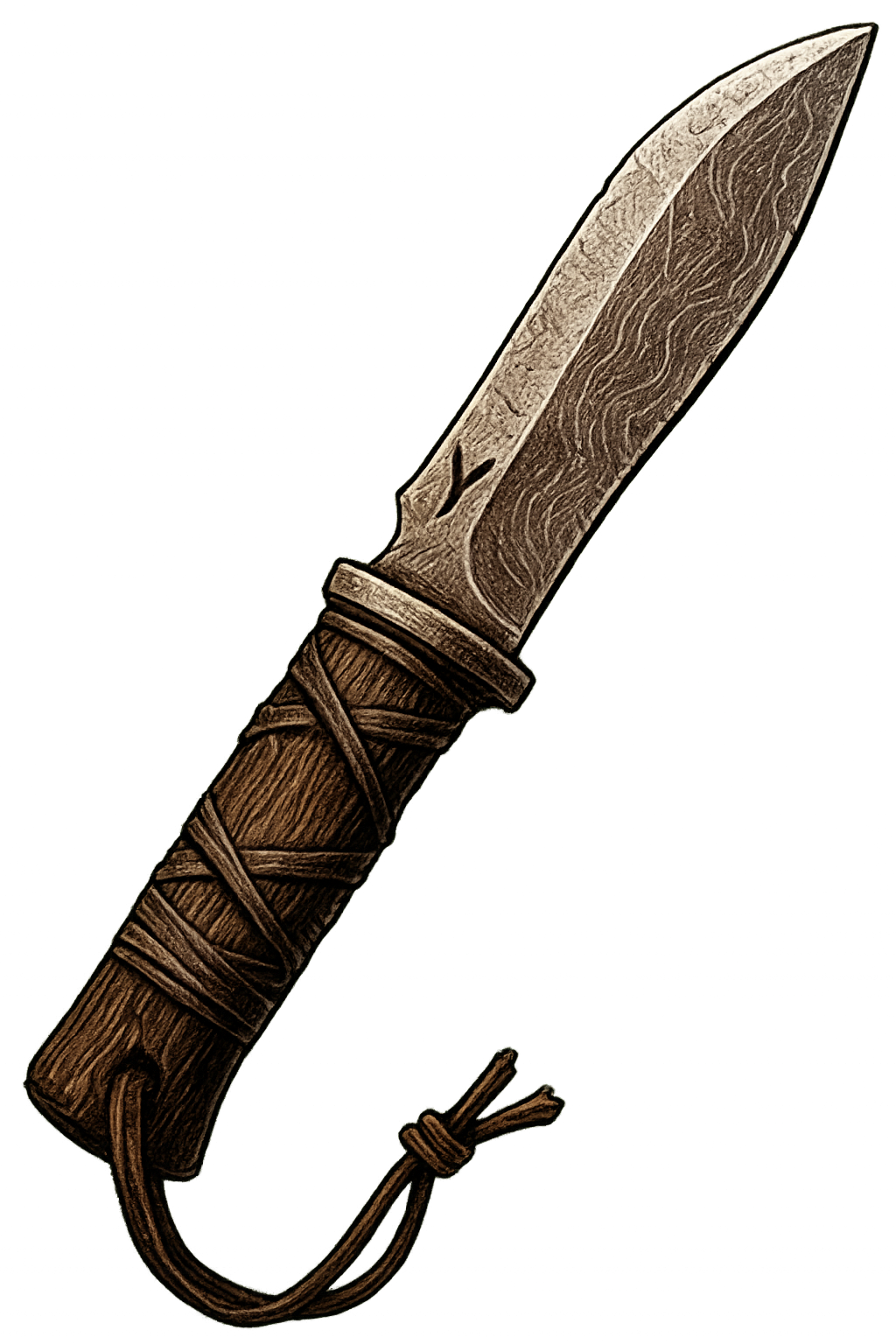
"From scales and hides to venom and bone, the creatures of Narumer hold countless treasures. Alchemists, leatherworkers and blacksmiths alike can find use for nearly every part of the beasts you fell in your travels."
Most creatures in Narumer can be harvested once they are dead, and many farm animals can be harvested while they are alive. What you get depends on the creature, how you killed it, your skill, and the quality of your tools.
New to harvesting? Kill the creature with as little damage as possible, use a harvesting knife on the body, then take the parts out of the carcass one at a time. Carry a vial for blood and similar parts.
¶ Overview
| Topic | In short |
|---|---|
| Flaying a kill | Use a harvesting knife on a body; each part is rolled separately |
| Skills used | Which skill a creature uses depends on its type |
| What affects the roll | Damage taken, your skill, the Hunter feat and your knife |
| Taking the parts | A skill check for each part, and some need a container |
| Stone and crystal creatures | They leave a node to mine instead of a carcass |
| Living animals | Feed animals, then shear or milk them |
¶ Flaying a Kill
- Kill the creature, ideally in a way that spares the parts you want (see Damage taken).
- Use a harvesting knife on the body. Some creatures need a special tool instead, such as a pickaxe for a stony elemental or a crystalline shell.
- The game rolls for each kind of part the creature has: hide, skull, bones, meat and special parts (organs, blood, bile, venom and so on). Every part you find is placed in a flayed carcass on the ground.
- Take what you want from the carcass. Some parts need a skill check, and some need a container (see Taking the parts).
A body can only be flayed once, and the flayed carcass only lasts about 3 minutes. Decide who is doing the work before you start.
¶ Skills Used
The skill used for a creature depends on its creature type. Builders can set a different skill for individual parts where it makes sense.
| Skill | Creature types |
|---|---|
| Heal 🩹 | Giants, elves, dwarves, halflings, half-orcs, humans, goblinoids, monstrous humanoids, orcs, reptilian humanoids |
| Knowledge: Arcane 🔮 | Elementals, fey, outsiders, oozes, aberrations, undead |
| Knowledge: Architecture 🧱 | Constructs |
| Knowledge: Nature 🍃 | Beasts, dragons, magical beasts, plants |
| Survival 🏕️ | Animals, vermin, shapechangers, and any type not listed above |
The flayed carcass's description tells you which skill was used.
¶ What Affects the Roll
Each creature has a chance for each kind of part. When you flay it, the game rolls a d100 for each one, and you find the part if the roll is at or under your final chance. That chance is built from:
- The creature's base chance for that part.
- Damage taken lowers it (see below).
- Your knife multiplies it (see Harvesting knives).
- Your skill: each point in the relevant skill adds +1%.
- The Hunter feat doubles the bonus from your skill.
¶ Damage taken
The way you kill a creature matters. Every point of damage of the types below lowers that part's chance by 1%, to a minimum of 1%. A creature torn apart by fire and blades won't leave much hide behind.
| Part | Slashing | Bludgeoning | Piercing | Fire/Acid | Cold | Electrical | Sonic | Negative/Divine | Magical | Poison/Psychic |
|---|---|---|---|---|---|---|---|---|---|---|
| Hide | ✗ | ✓ | ✓ | ✗ | ✓ | ✓ | ✓ | ✓ | ✗ | ✓ |
| Bones | ✓ | ✗ | ✓ | ✓ | ✗ | ✓ | ✓ | ✓ | ✗ | ✓ |
| Special* | ✓ | ✓ | ✗ | ✓ | ✓ | ✗ | ✗ | ✓ | ✗ | ✓ |
| Meat | ✓ | ✓ | ✓ | ✓ | ✓ | ✓ | ✗ | ✗ | ✗ | ✓ |
| Skull | ✓ | ✓ | ✓ | ✓ | ✓ | ✓ | ✓ | ✓ | ✓ | ✓ |
✓ = Safe ✗ = Harms the part (-1% per point of damage)
*Special covers anything that isn't hide, bone, meat or skull: organs, blood, bile, venom and so on.
- Weapons count by their damage type: a mace lowers bones, a sword lowers hide, a spear or arrow lowers special parts.
- Poison and psychic damage lower nothing.
Tip: to collect a fine hide, finish the beast with blunt weapons or cold. To keep its organs and blood, avoid arrows, spears and lightning.
¶ Harvesting knives
The quality of your knife scales every part's chance:
| Knife | Effect |
|---|---|
| Primitive (Tier 0) | ×0.75. Druids use it at ×1.0, plus 0.1 for each druid level |
| Tier I | ×1.0 |
| Tier II | ×1.25 |
| Tier III | ×1.5 |
Some specialised knives also add a flat bonus to particular parts, such as a skinning knife that is better for hides.
¶ Taking the Parts
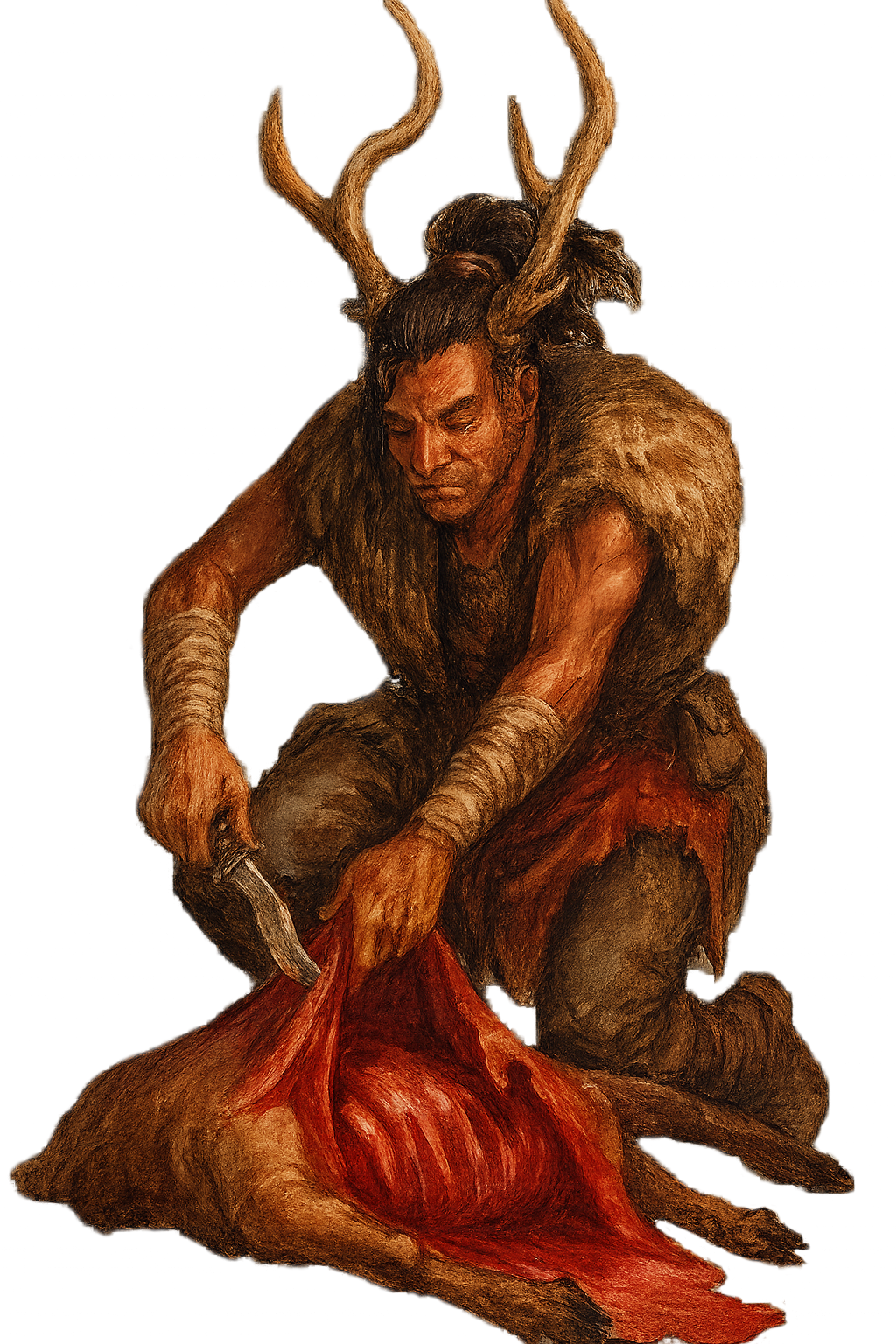
Every part you found sits in the flayed carcass. Taking one out may need more:
- Skill check: many parts need a check against a set difficulty, usually with the same skill used for the creature. If you fail, the part is destroyed. The Hunter feat gives +2 to these checks.
- Container: some parts need a collection item, such as an empty vial for blood. The container is checked after a successful skill check: if you don't have one, the part goes back into the carcass instead of being lost, so you can try again once you have one.
- Parts with no check come out automatically.
When the carcass is empty, it disappears.
¶ Stone and Crystal Creatures
Creatures made of stone, ore or crystal don't leave a carcass. Instead they leave a node named after the creature, which you work like a resource node with the right tool (a pickaxe, for example). The node holds a set amount of material and disappears after about 5 minutes.
¶ Living Animals
Many domestic animals can be harvested without killing them: sheep sheared for wool, cows and goats milked, and so on. Talk to the animal to see what it needs.
- Feed it. Each animal eats a particular food. Feed it until it has eaten enough.
- Harvest it with the right tool: shears for wool, a bucket for milk, and so on.
- Wait. After a harvest, the animal needs time before it can be fed and harvested again.
You can also lead some animals, and slaughter domestic animals quickly and safely through their conversation (see the tips below).
Over-killing: the land keeps track of its livestock. Slaughter domestic animals faster than they recover, instead of feeding them for their resources, and they will eventually stop spawning.
¶ Helpful Hints
- Slaughtering livestock: talk to a domestic animal, such as one in the town barn, with your harvesting knife equipped for a safe, quick slaughter.
- Pick your harvester: let the party member with the best skill do the work, and describe it in character.
- Carry a vial or two: blood and similar parts need one.
- Mind the clock: the flayed carcass lasts about 3 minutes, and stone and crystal nodes about 5.
- Druids: making use of what you kill matters to your faith. See Piety.